Legislative Changes in 2022: Handheld Devices and Road Safety
In our series of Legislation Changes in 2022 blogs by our Kickstart Marketing Assistant, Joanna, we’ll look at how legislative changes planned for this year could impact your business. Whilst many of us may be hoping for "business as usual” at some point this year, we also need to consider the legislative changes planned for 2022 and where you may need to make changes to how you conduct your business.
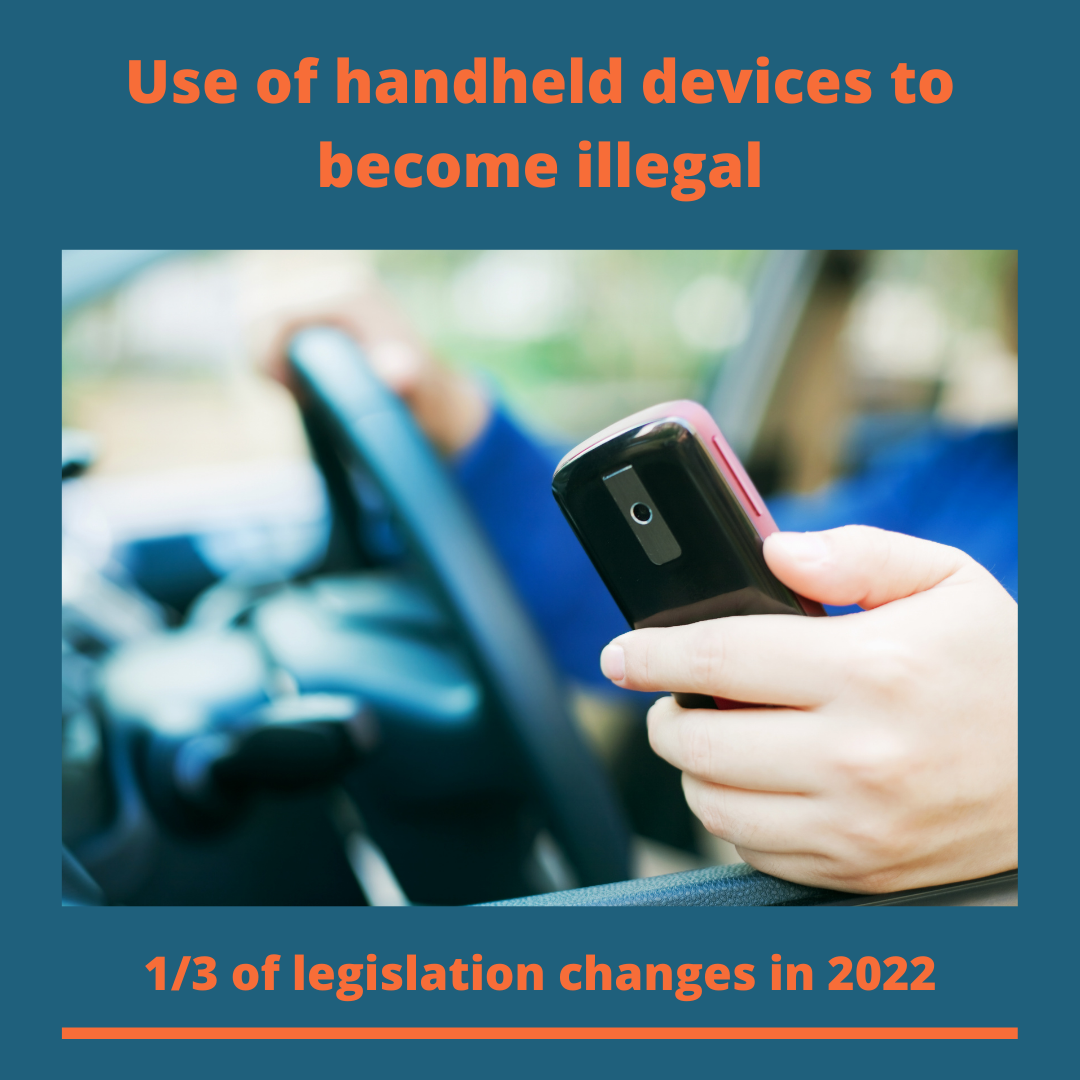
Use of Handheld Devices to Become Illegal
Did you know drivers holding their phones while driving a vehicle are four times more likely to crash? While it was already illegal to text or make a call while driving using a handheld device (other than in an emergency), the original legislation (2003) came in before smartphones were introduced. It has long been recognised that there was a need to strengthen the law and make it easier for offenders to be prosecuted.
A news story on Gov.uk claims 81% of people supported the move to change the legislation regarding mobile phones, revealing a public concern of road safety following life-threatening accidents where mobile phones were involved.
Transport Secretary Grant Shapps stated in an interview:
“While our roads remain among the safest in the world, we will continue to work tirelessly to make them safer, including through our award-winning THINK! Campaign, which challenges social norms among high-risk drivers.”
High-risk drivers typically include those who have been convicted of driving under the influence (DUI), experienced numerous car accidents, or accumulated countable points on their license.
What the 2022 Legislation Means
The change in legislation in 2022 will mean drivers are now also banned from using phones to take photos or videos, scroll through playlists, or play games. Anybody caught using a mobile not only while driving but stationary at traffic lights, congested roads, and waiting at junctions will be prosecuted.
Offenders face a £200 fixed penalty notice and 6 points on their licence, which means new drivers (within the first two years of passing the driving test) will lose their license altogether.
Alarmingly, the Department for Transport discovered that 63% of motorists used their phone while driving for work reasons, suggesting more than half of drivers feel pressured to answer the phone while driving. It is essential you ensure staff are aware of the new regulations but also conscious of when they may be driving—work-related calls and emails can wait.
The exception to the rule is, of course, emergencies, but also drive-thrus as Apple Pay and Google Pay have become a more common method of payment, especially due to COVID-19. At least this means you can still leave your card and cash at home if you don't want to overfill your pockets.
Check out our other blogs in the series:
Handheld Devices And Road Safety