Overcoming Exam Nerves: Building Resilience Through Failure
In this blog, our Kickstart Marketing Assistant, Jo, shares her experience of sitting an exam in Insurance and offers insight and advice for anyone dealing with exam nerves, stress, or pressure. Use this story to encourage members in your organisation to be resilient and ease their nerves about upcoming tests and exams they may have.
First Impressions of Insurance
I’ll admit it—I was rather dismissive of Insurance when I first began studying for FIT (Foundation Insurance Test) through the CII. Everything about Insurance was completely new to me, and the nine detailed sections of the course, combined with the hundreds of Insurance-specific jargon terms, felt super daunting.
As I worked through the sections, I started to understand them better. Slowly, the puzzle began to make more sense. Confident that I had a grasp on the material, I thought I’d discipline myself, sit the exam, and get it out of the way.
But then I learned my first big lesson: understanding something is very different from remembering it.
The First Attempt and Its Lessons
Exams are typically designed to test your basic knowledge of a subject, so I assumed I would pass a Level 2 multiple-choice exam with ease after reading over each section. Unfortunately, I failed my first attempt.
As someone who has a tendency to be self-deprecating, failing made me feel defeated and sad. I convinced myself I wasn’t smart enough or interested enough to retain all of the information.
Thankfully, my mentor Clare reassured me I’d pass next time. But my immediate thought was: Next time? I have to do this exam again?
The Pressure of “Just Do Your Best”
Exams make many people nervous. I think it comes down to three main pressures:
The pressure of time.
The pressure you put on yourself.
The pressure others may put on you without realising it.
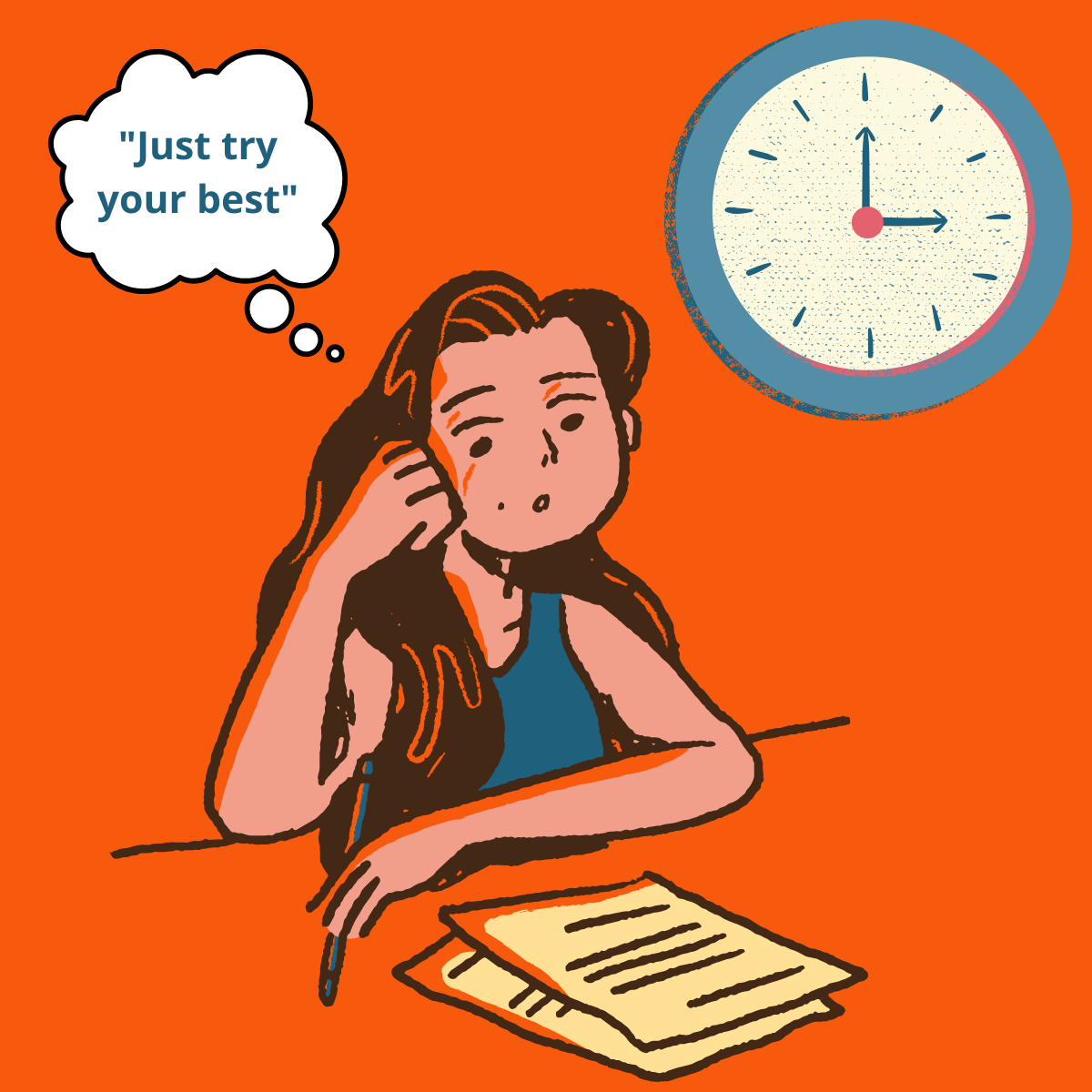
When I told a family member I was nervous about the exam, they said, “Just do your best.” I always thought that phrase was supposed to ease nerves, but it can sometimes make them worse.
As someone who has struggled with anxiety since early adolescence, there’s a lot of pressure in those words. You start to wonder:
If I do my best and still fail, does that mean my best isn’t good enough?
Does that mean I’m not good enough?
That kind of thinking leads you down the path of self-defeat and low self-esteem before you’ve even had another try.
Changing My Approach
But that’s just it—the exam itself is the source of those feelings. So why not just try again? If I passed the next time, I knew I’d feel better.
So I started revising again, but with a new approach:
Testing myself actively rather than just re-reading the content.
Revisiting weak sections until I properly understood them.
Making condensed notes and highlighting key points.
Using sticky notes for the facts that just wouldn’t stick.
Eventually, my mock test results improved. I started achieving at least 70% (the pass rate), which boosted my confidence.
In a nutshell: preparation is one key to success.
The Role of Resilience
The other key to success is resilience.
The ability to keep trying, even after failure, is vital. Even if you feel defeated inside, resilience is the outward belief in yourself—the proof that you’re willing to keep going.
And that determination can make all the difference.